
An ecological house is not just about installing solar panels on a roof. The term refers to a habitat whose design, materials, and daily uses aim to reduce energy consumption, limit indoor pollutants, and maintain stable thermal comfort, both in summer and winter. Two main axes structure this approach: the building envelope (insulation, orientation, inertia) and the lifestyle choices inside (equipment, maintenance, water management).
Summer comfort and overheating: the blind spot of the ecological house
Most guides on ecological housing focus on winter heating. The issue of summer comfort remains underestimated, even though it directly affects the quality of life in a house for several months of the year.
The RE2020 includes a degree-hour indicator to assess overheating in new constructions. Even a recent house can remain uncomfortable during heatwaves if solar protections and thermal inertia are insufficient. The DPE now evaluates summer comfort on three levels, and recent analyses show that a significant portion of French housing remains poorly adapted to heatwaves.
In practical terms, several levers can limit overheating without resorting to air conditioning:
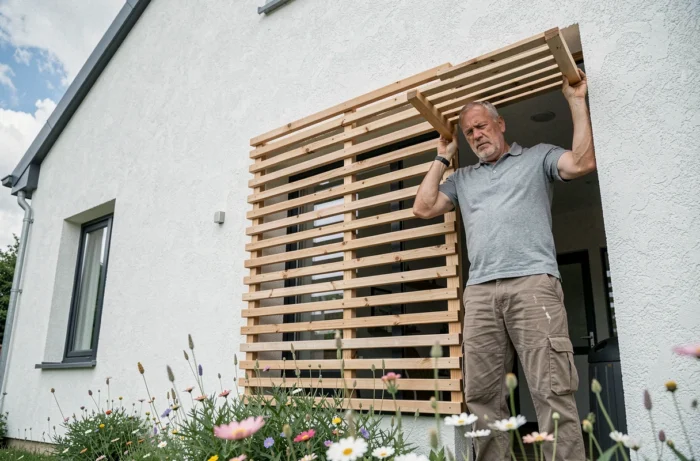
- External solar protections (shutters, adjustable sunshades, green pergolas) block radiation before it reaches the glazing, which is much more effective than an interior blind.
- The thermal inertia of walls made from raw earth, monomur brick, or hemp concrete absorbs daytime heat and releases it at night, smoothing out temperature fluctuations.
- Cross-ventilation at night, facilitated by bioclimatic design with opposing openings, evacuates accumulated heat without consuming energy.
Several specialized resources detail these approaches for each room in the house. Reports published on the Media Libre website specifically address interior layout choices that influence daily thermal comfort.
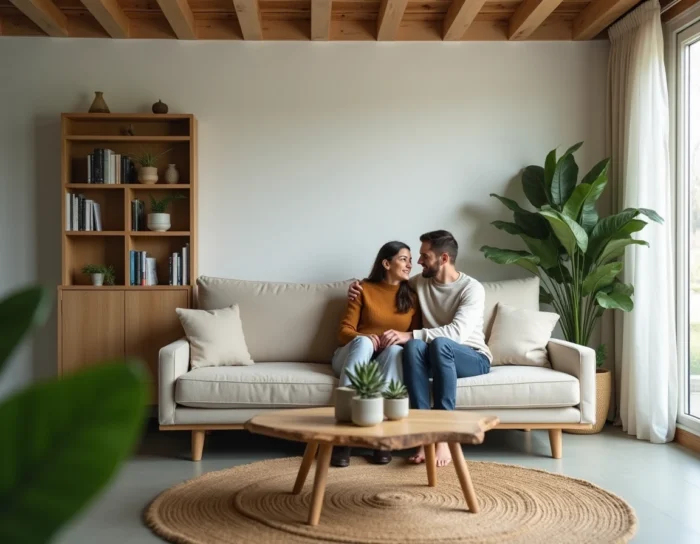
Biosourced materials for construction and renovation
The choice of materials forms the foundation of an ecological house. Biosourced materials (wood, hemp, straw, cellulose wadding, cork) have a dual advantage: they store carbon instead of emitting it during their production, and they naturally regulate indoor humidity.
Wood, used in framing or cladding, offers a high strength-to-weight ratio and quick implementation. Hemp, mixed with lime, produces a lightweight concrete whose thermal and acoustic insulation properties are suitable for both new builds and renovations.
Precautions to take before choosing
A poorly installed biosourced material loses a significant part of its qualities. Cellulose wadding blown into attics must reach a sufficient density to avoid settling over the years. Cork panels require a flat support and careful cutting to eliminate thermal bridges at joints.
The origin of the materials is as important as their nature. Certified wood from sustainably managed forests and locally processed has a very different environmental footprint compared to exotic wood imported by cargo. Checking labels (PEFC, FSC) and transport distances is an integral part of a coherent ecological approach.
Energy savings in daily life: the actions that really matter
Not all ecological actions are equal. Lowering the heating by one degree has a measurable impact on a household’s energy consumption. Turning off an LED when leaving a room, much less so.
The most effective arbitration concerns domestic hot water production. Setting the water heater between 55 °C and 60 °C limits scaling while slowing bacterial growth. A thermodynamic water heater, which captures calories from the ambient air, consumes significantly less than a traditional electric water heater for the same service.
Kitchen and appliances
In the kitchen, cooking represents a consumption area often overlooked. Covering pots reduces heating time. Using a convection oven allows for a lower set temperature compared to a traditional oven, achieving equivalent cooking results.
High energy efficiency appliances pay off over the lifespan of the device, not in the first year. A refrigerator rated in the best categories consumes a fraction of the energy of an older model, and the price difference at purchase is compensated over a few years on the electricity bill.
Energy renovation: financial aids and work priorities
Renovating an old house to make it ecological requires prioritizing interventions. Insulating attics and roofs, where the largest share of heat escapes, is generally the first project to undertake. Next come the walls, followed by the windows.
Renovation aids (MaPrimeRénov’, energy savings certificates) are regularly evolving. The new rules for MaPrimeRénov’ tend to refocus funding on comprehensive renovations rather than isolated actions, which may leave some households wishing to proceed in stages without support.
The energy audit as a starting point
Before starting work, an energy audit identifies the actual heat losses of the building and proposes a coherent renovation pathway. This diagnosis goes further than the DPE: it quantifies expected gains item by item and allows for prioritizing investments according to the available budget.
Energy renovation is not only about winter. As mentioned earlier, summer comfort is becoming an increasingly scrutinized criterion in diagnostics. Integrating solar protections or enhancing wall inertia during a comprehensive renovation avoids the need for a second intervention a few years later.
An ecological and comfortable house relies on precise technical choices, adapted to the local climate and existing structures. Summer comfort, long ignored, now weighs in diagnostics and in the value of a property. Each intervention, from insulation material to the setting of the hot water tank, benefits from being considered as part of a whole rather than treated as an isolated action.