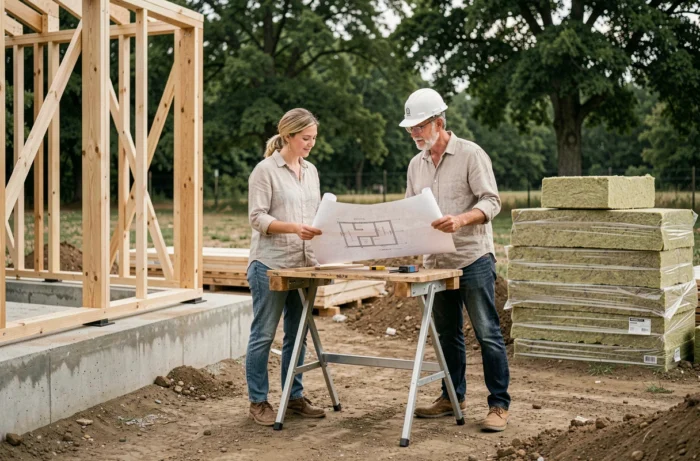
The environmental regulation RE2020, which came into effect for new individual houses, imposes thresholds on energy consumption, the carbon footprint of materials, and summer comfort. All house builders are required to comply with these requirements. The challenge for an individual carrying out an eco-responsible construction project is no longer merely about meeting the minimum regulatory standards, but rather about the ability to identify those who go beyond, with supporting evidence.
RE2020 open data: a concrete verification tool for choosing a builder
The Ministry of Housing has made public the RE2020 performance data of new buildings, accessible in open data via the RE2020 Observatory. This data covers the bioclimatic needs, energy consumption, carbon impact over the life cycle, and summer comfort for individual or attached houses.
A committed builder should be able to present their results on these indicators, not just display a label or generic CSR discourse. Field feedback varies on this point: some professionals spontaneously share their simulations, while others limit themselves to regulatory compliance without detailing the calculations.
Before signing, request access to the complete thermal studies of the project, and compare the declared results with the averages available on the observatory. A directory like constructeurs-responsables.fr facilitates the identification of professionals who document their environmental performance.
Summer comfort and overheating: the criterion that ecological house builders underestimate
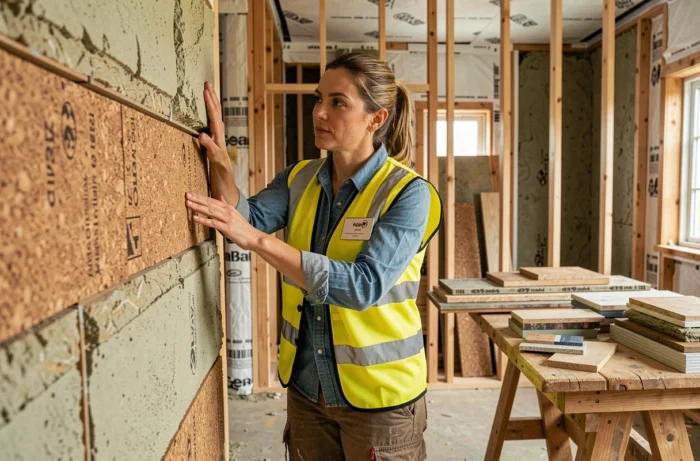
RE2020 has introduced a distinct objective for summer comfort in new housing, separate from the requirements on energy consumption. A highly insulated house, with strong airtightness, can become uncomfortable during heat waves if the design has not integrated overheating management.
This risk depends on several parameters: orientation of the windows, presence or absence of external solar protections (sunshades, shutters), thermal inertia of construction materials, night ventilation, and possibilities for passive cooling. A builder claiming to be eco-responsible should provide a simulation of overheating risk from the design phase.
Ask the question directly: what summer comfort indicator is targeted, and what passive devices are planned to achieve it? The available data does not yet allow for conclusions about the actual effectiveness of all the solutions proposed by builders, but a complete lack of response on this topic is a warning signal.
CCMI and guarantees: what the construction contract reveals about the builder’s commitment
The individual house construction contract (CCMI) is the legal framework that protects the project owner. It includes a delivery guarantee at the agreed price and deadline, a damage insurance, and a ten-year guarantee. These protections are mandatory, not optional.
However, not all CCMIs are equal in terms of environmental aspects. Some builders include specific commitments regarding biosourced materials (wood, hemp, cellulose wadding), renewable energy heating systems, or energy performance levels exceeding the RE2020 threshold. Others stick to the bare minimum.
Here are the points to check in the contract before signing:
- Does the descriptive notice detail the construction materials used (type, origin, thermal characteristics), or is it vague with mentions of “or equivalent”?
- Does the builder contractually commit to a quantified energy performance level, beyond the regulatory threshold?
- Is the delivery guarantee backed by an identified guarantor, and are the conditions for enforcement clear in case of default?
- Do the work acceptance procedures provide for support by an independent expert, or does the builder manage this step alone?
A builder who refuses to specify these elements in writing in the CCMI does not make a real commitment.
RE2020 regulatory anticipation: distinguishing a committed builder from a compliant builder
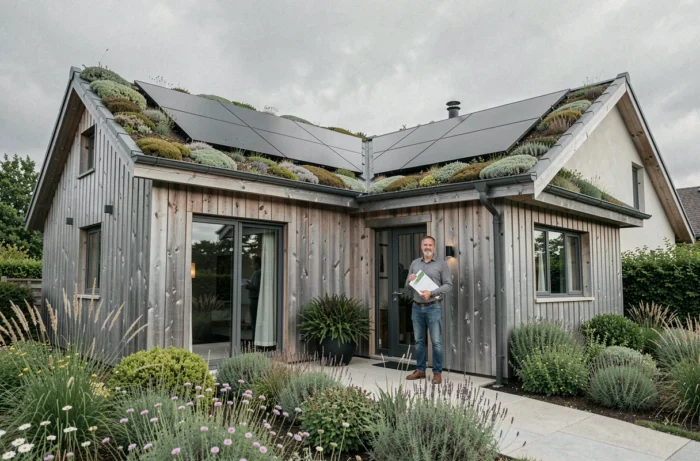
The RE2020 guide from Cerema was updated in September 2026, illustrating the evolving nature of this regulation. Carbon thresholds and performance requirements are tightening in stages. A builder who only meets the current level risks delivering a home that is already behind tomorrow’s standards.
Ask the professional about their regulatory monitoring. Are they aware of the upcoming stages of RE2020 and do they anticipate them in their current construction projects? Do they offer constructive solutions (biosourced materials, bioclimatic design, low-consumption equipment) that are ahead of the regulatory schedule?
This ability to anticipate distinguishes a builder truly committed to sustainable construction from a professional who applies the standard without a medium-term vision. Field feedback shows that builders who invest in the ongoing training of their teams and in the search for innovative materials achieve significantly better carbon performance than average.
Biosourced materials and the wood sector: check the builder’s supplies
The choice of construction materials represents a significant part of the carbon footprint of an eco-responsible house. Wood, hemp, straw, cellulose wadding: biosourced sectors are developing, but the origin and traceability of materials vary considerably from one builder to another.
A committed builder should be able to document the origin of their wood supplies (sustainably managed forests, recognized certifications), the composition of their insulations, and the carbon balance of the materials they implement. The difference between a locally manufactured wooden frame and an imported kit is not negligible from an environmental perspective.
- Request the environmental and health declaration sheets (FDES) for the main materials planned for the project
- Check if the builder works with local or regional suppliers to limit logistical impact
- Inquire about the share of biosourced materials in the building envelope (insulation, structure, joinery) compared to conventional materials
The consistency between the eco-responsible discourse and the reality of supplies is a more reliable selection criterion than a label displayed on a commercial brochure. An ecological house project is judged by the detail of its descriptive notice, not by its marketing arguments.