
Saving on a daily basis doesn’t mean cutting back on everything to the point of discomfort. It’s about identifying areas where money is leaking without real return, and then redirecting those amounts to what truly matters. Housing remains the largest expense for French households, and its share of the budget has slightly increased in recent years. Therefore, the leeway can be found both in fixed charges and in weekly grocery shopping.
Fixed Charges and Housing: A Lever That Small Tips Can’t Replace
Reducing food expenses by a few euros a week has a limited effect if, at the same time, home insurance or phone plans have never been renegotiated. Recurring charges represent the heaviest part of a budget, and this is where each adjustment has a cumulative effect over the year.
Insurance, in particular, is often a fixed expense. Many contracts renew automatically without the rates being compared to competitors. Since the Hamon Law, canceling auto or home insurance after one year of contract only requires a letter or a few clicks. Comparing insurance contracts each year can represent several hundred euros saved.
For digital subscriptions, the reflex is the same: list each monthly withdrawal, and cancel those that are used less than once a month. Platforms like economiz.fr allow you to quickly spot the cheapest offers on various daily expenses, from energy to telecommunications.
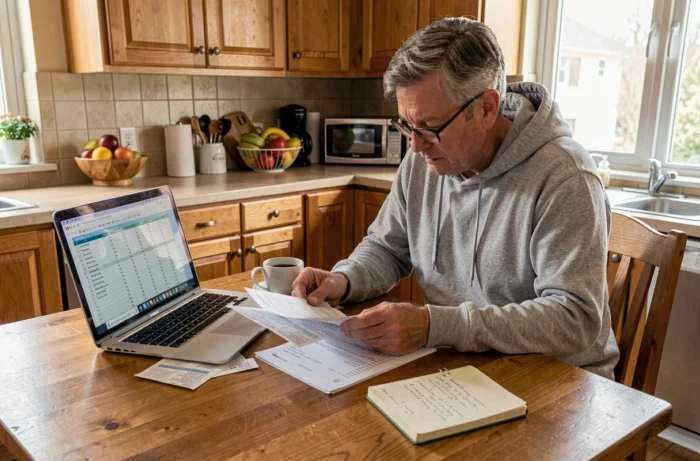
Grocery Budget and Food: Planning to Spend Less
Food is the second largest expense for a family. The difference between a household that manages this budget and another does not lie in the choice of one store over another, but in the purchasing method.
The Shopping List: An Anti-Impulse Filter
Shopping without a list mechanically increases the total bill. The principle is known but rarely applied rigorously. An effective list starts from the planned meals for the week, not from a stroll down the aisles. By planning menus before heading out, you buy what you will actually cook, and limit waste.
Cooking from raw ingredients rather than prepared meals reduces the cost per serving. This is not an abstract piece of advice: a vegetable pasta dish made with seasonal produce costs significantly less than its equivalent wrapped in plastic, at comparable quantities.
Reducing Food Waste at the Source
Food waste is an invisible expense. Every food item thrown away is money lost twice: at purchase and at replacement.
- Store leftovers in transparent containers to see and consume them before they spoil
- Freeze excess portions on the same day of cooking to maintain their quality
- Use overripe fruits in compotes or smoothies instead of throwing them away
Reducing waste by half is equivalent to increasing your grocery budget without spending more.
Daily Energy Savings: Actions That Impact the Annual Bill
Energy is an area where daily habits have a direct and measurable effect. Lowering the heating by one degree in living spaces significantly reduces consumption over an entire season. It’s an invisible adjustment to comfort, but very visible on the bill.
For hot water, reducing the temperature of the tank to 55 °C is sufficient to meet sanitary needs while limiting electricity consumption. Hot water represents a significant portion of the energy bill, especially in homes equipped with electric water heaters.
For those considering more extensive renovations, the landscape of aid has changed. Since September 2026, MaPrimeRénov’ has been refocused on large-scale renovations and certain decarbonized heating equipment. Several previously eligible renovations are no longer covered.
Keeping gas or oil heating after renovations can result in losing the aid in some cases for individual homes. The energy voucher, on the other hand, no longer finances energy renovation work: it now focuses on paying energy bills.

Everyday Purchases and Consumption Habits: Buy Less but Better
Buying second-hand is a powerful lever, especially for clothing, furniture, and electronic equipment. The second-hand market has become structured in recent years, with specialized platforms for each product category. For children’s clothing, which has a short usage duration, buying second-hand can cut the budget by two or three without compromising quality.
For new purchases, a simple rule works well: wait 48 hours before any unplanned purchase over a certain amount. This waiting period eliminates the majority of impulse buys, which represent a significant portion of unplanned household expenses.
- For clothing, prioritize versatile pieces that can be mixed and matched rather than trendy items with limited use
- For home equipment, check clearance sites and private sales before buying in stores
- For children, organize exchanges with other families for already used toys and books
The goal is not to deprive oneself, but to shift spending towards what provides lasting satisfaction. A dinner with friends at home costs a fraction of the price of a restaurant, for often equivalent enjoyment. Saving without deprivation relies on conscious trade-offs, not restrictions.
The most significant leeway is rarely found in isolated small gestures. It appears when combining the renegotiation of fixed charges, a structured food purchasing method, and some energy adjustments. The cumulative effect of these levers, even modest when taken individually, can sustainably alter the balance of a family budget.