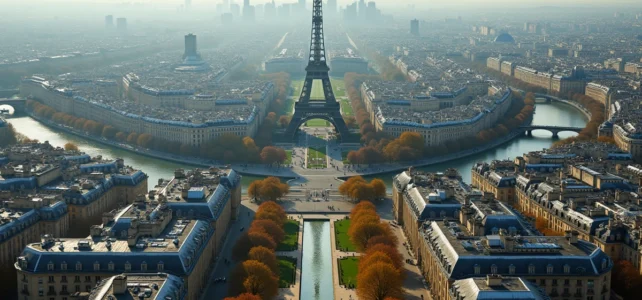
Paris attracts millions of visitors each year who stroll its sidewalks, walk along the Seine, and rarely lift their eyes above the second floor of Haussmannian buildings. However, the French capital reveals itself from a radically different angle when viewed from above.
Aerial views from a drone, panoramas from a rooftop in the 13th arrondissement, or flights in a light aircraft: the range of viewpoints on the city has significantly expanded in recent years, well beyond the classic Eiffel Tower or Sacré-Cœur.
Aerial Flight Over Paris: A Regulation That Governs Everything
Before discussing panoramas, it’s essential to establish a framework that is often overlooked. The overflight of Paris intra-muros by aircraft, including recreational drones, is subject to some of the strictest restrictions in France. The General Directorate of Civil Aviation (DGAC) classifies almost the entire capital as a prohibited or regulated zone.
For drones, this means that an individual cannot legally launch their device above the Luxembourg Gardens or the Bois de Vincennes without specific prefectural authorization. The aerial images of Paris circulating on social media primarily come from professional operators holding exemptions or from flights conducted from manned aircraft (helicopters, light planes) operating from aerodromes located outside the dense area.
This regulatory context explains why aerial views of Paris remain rare and sought-after content. The photographers and videographers who produce these images work within a restrictive legal framework, giving each shot a particular documentary value. These archives can be found on the homepage of Paris seen from the sky, which gathers a collection of photographs taken during authorized overflights of the capital.
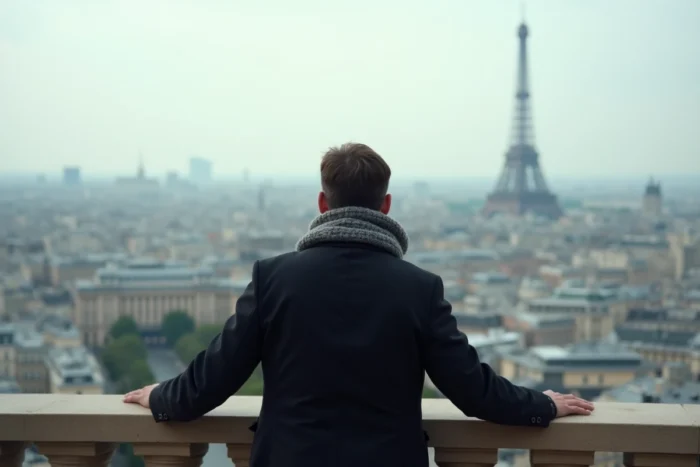
Rooftops and Sky Bars in Paris: A New Generation of Urban Panoramas
The historic observation platforms (Tour Montparnasse, Arc de Triomphe, Pantheon dome) are well documented by all tourist guides. What has changed in recent seasons is the emergence of a private offering of rooftops open to the general public, which alters how one accesses Parisian panoramas.
The TOO Hotel, located in the 13th arrondissement, exemplifies this trend. Its sky bar, perched at around 130 meters high, offers a direct view of the Eiffel Tower and the southern skyline of Paris. With plates starting at just 8 euros, the establishment targets a broad audience, not just high-end hotel guests.
This type of venue represents direct competition to institutional observatories. The experience is different: you settle in, consume, and stay. The panorama becomes a backdrop for an evening rather than a timed visit behind glass.
What Distinguishes a Rooftop from a Classic Observatory
- Access is often free or conditioned on consumption, whereas observatories charge a dedicated entry fee
- Opening hours cover the evening and night, allowing for views of illuminated Paris without time constraints
- The angle of view is sometimes more original than a central monument, as these establishments are located in peripheral arrondissements or nearby suburbs
The offering of panoramic rooftops in Paris has exploded in recent years, with openings in neighborhoods not previously associated with height tourism.
Free and Little-Known Viewpoints: Beyond the Monuments
The most striking panoramas of Paris are not necessarily found at the top of a paid monument. Several hills and parks on the outskirts offer wide views of the city, accessible without a ticket or reservation.
These viewpoints in Greater Paris are free and accessible year-round, making them a concrete alternative for an unusual visit to the capital without a dedicated budget.
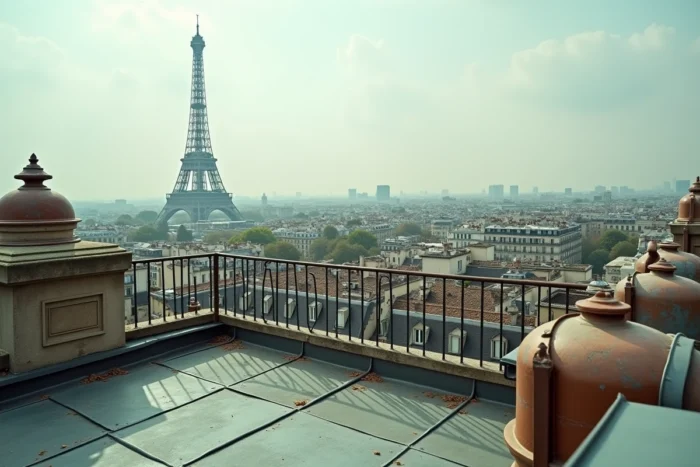
Why These Panoramas Remain Uncrowded
Most of these sites do not appear in traditional tourist guides. They require a journey by public transport followed by a walk, which distances them from the standard visitor circuit. In contrast, for residents of Île-de-France, these hills offer the best free panoramas of Paris.
The contrast between the dense urban fabric below and the greenery of the parks above creates a visual effect that central observatories cannot replicate.
Aerial View of Paris: What Format to Choose for What Experience
Depending on the desired objective, the format of the aerial view varies significantly. An overflight by plane or helicopter departing from a Francilian aerodrome offers a comprehensive perspective on Parisian urbanism: one perceives the logic of the arrondissements, the course of the Seine, and the extent of the Bois de Boulogne compared to the built environment.
- Overflights by plane or helicopter provide a large-scale overview, ideal for understanding the city’s geography
- Professional drones produce close-up and dynamic images, often used for cinema or heritage documentation
- The rooftop or panoramic terrace offers a static immersion, conducive to prolonged contemplation
- Archive aerial photography, such as that offered by specialized collections, allows for comparisons of urban landscape evolution over several decades
Each format serves a distinct purpose. The overflight remains the most comprehensive experience for grasping Paris in its entirety, but regulatory constraints and costs reserve it for occasional opportunities.
The proliferation of accessible rooftops, combined with the scarcity of overflight authorizations for individuals, shapes a landscape where professional aerial views gain value while panoramas from terraces become the most common way to see Paris from above. The choice between the two depends as much on budget as on what one seeks: an image to take home or a moment to experience.