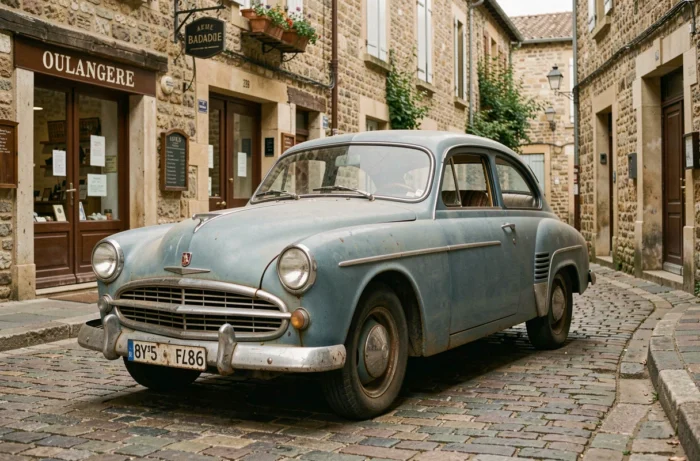
The word “titine” colloquially refers to a car in French, but its linguistic journey is less straightforward than it seems. Between a diminutive of a popular first name in the early 20th century, a song from 1914, and the slang of Parisian streets, several paths intersect. This article compares the documented hypotheses to trace how an affectionate term came to designate a mechanical object.
Hypotheses on the etymology of the word titine: comparative table
Three main explanations circulate to explain the transition of “titine” from the human register to the automotive register. Their origins, times, and vectors of diffusion differ significantly.
| Hypothesis | Origin | Time of appearance | Vector of diffusion |
|---|---|---|---|
| Affectionate diminutive of a first name (Christine, Ernestine, Valentine, etc.) | Familiar use of the suffixes “-ine” and “-ette” in French popular circles | Late 19th – early 20th century | Everyday oral language |
| Song La Madelon (1914) | Lyrics mentioning “Titine” as an endearing female character | 1914 | Popular songs, café-concerts, soldiers of the Great War |
| Lineage with the “titi parisien” | “Titi,” nickname for resourceful young Parisians from the working class, itself derived from “tititi,” a familiar name for the sparrow | Late 19th century | Parisian slang, working-class urban culture |
These three paths are not mutually exclusive. They likely converged to anchor the term in the French automotive vocabulary, each adding a layer of meaning: the tenderness of the diminutive, the notoriety of the song, and the popular image of the titi parisien, clever and modest.
An article detailing the origin of the nickname titine for a car traces this shift from the first name to the mechanical object, emphasizing the role of La Madelon in popularizing the term.
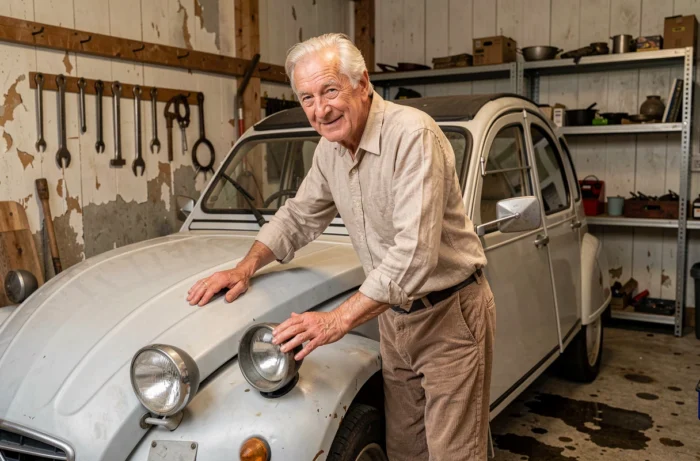
From titi parisien to the titine car: an underestimated popular lineage
Most articles on the subject focus on the affectionate explanation or the 1914 song. The hypothesis of the “titi parisien” provides a different perspective, rooted in urban sociology.
The word “titi” historically referred to young Parisians from the working class, mischievous and resourceful. This nickname derived from “tititi,” a familiar term for the sparrow, a bird ubiquitous in the working-class neighborhoods of Paris at the end of the 19th century. The sparrow symbolized a small, agile, lively creature, not prestigious but surviving.
When the first affordable automobiles replaced carts in modest households, the car inherited this imagery. Calling one’s car “titine” connected it to the world of the urban lower class, not to that of luxury. The term was rarely applied to new sedans or high-end models.
A nickname reserved for modest cars
This lineage with the titi explains why “titine” is almost always used for older, worn-out, or entry-level vehicles. One says “my titine” when referring to a battered car that starts on the first try, not a brand-new sports coupe.
The term carries a form of popular pride: the car doesn’t need to be beautiful or powerful to deserve affection. This nuance distinguishes “titine” from other more neutral automotive nicknames like “caisse” or “bagnole,” which do not convey the same emotional weight.
Song from 1914 and popular culture: how titine entered automotive vocabulary
The song La Madelon, composed in 1914, mentions “Titine” as a charming and familiar female character. Massively spread in café-concerts and later sung by soldiers during the Great War, it inscribed the word in the French collective memory.
The mechanism is comparable to what happened with other first names that became common nouns. In French, the transition from an affectionate first name to the designation of an object follows a recurring pattern:
- The first name is first a tender diminutive used in the intimate circle (Titine for Christine, Valentine, or Ernestine)
- A popular cultural work (song, film, series) propels it beyond the family circle, giving it national notoriety
- By metaphorical shift, the first name applies to an object to which human qualities are attributed (loyalty, endurance, whim)
In the case of “titine,” the song played the role of an accelerator. The word already existed in oral use, but La Madelon gave it a visibility that Parisian slang alone would not have produced.

Titine nickname and automotive anthropomorphism: what linguistics reveals
Giving a name to one’s car is part of a well-documented phenomenon in psychology: anthropomorphism, or the attribution of human characteristics to objects. This behavior concerns a significant portion of French motorists.
The choice of “titine” over another name is not trivial. Linguists observe that nicknames given to everyday objects often share several characteristics:
- Redoubled or childish sounds (“titi,” “doudou,” “nounours”) that convey an emotional bond
- A feminine register, as the car is grammatically feminine in French, which favors feminine names
- A popular or retro connotation, avoiding names perceived as too formal or modern
“Titine” ticks all these boxes. The repetition of the syllable “ti” produces a soft and childlike sound effect. The suffix “-ine” anchors the word in the repertoire of traditional French feminine names. And the popular connotation inherited from the titi parisien prevents the term from sounding precious.
A phenomenon that transcends France
Other languages also assign affectionate nicknames to cars, but rarely with such a universal term. In English, motorists generally choose a name specific to their vehicle (“Betty,” “Betsy”) rather than a generic term. French is one of the few languages to have a unique nickname applicable to any car, regardless of the model or brand.
This linguistic peculiarity reflects the French relationship with the automobile: a utilitarian object, certainly, but also a travel companion to which one becomes attached. The word “titine” condenses in three syllables this ambivalent relationship between pragmatism and sentimentality, between mechanics and affection. The fact that it persists in everyday use, more than a century after its first occurrences, confirms that the nickname has found its place in a linguistic niche that no other term competes with.