The theme of a wedding is no longer limited to a choice of colors or decorations. Couples getting married in 2026 are looking to create a cohesive experience, where every detail tells something of their story. This evolution changes the way we think about the theme: it is no longer about replicating a Pinterest universe, but about starting from what makes sense for two specific people.
Wedding theme or decorative style: a costly confusion
Most theme lists mix two distinct notions. A decorative style (rustic, industrial, baroque) dictates an aesthetic. A theme, on the other hand, carries a narrative thread: a founding journey, a shared passion for the sea, a literary universe. Confusing style and theme often leads to a decoration that is pretty but devoid of meaning.
A couple who loves the mountains may choose a rustic-chic style without it constituting a theme. The theme appears when the mountain universe also influences the menu (mountain cheeses, Savoie wine), the music, the ceremony booklet, or the activities offered to guests. The difference lies in depth, not appearance.
Before browsing inspiration catalogs, it is useful to ask a simple question: what you want to convey to your guests is a visual ambiance or a story? The answer guides the entire process. To deepen this reflection, wedding advice on Et ils se Marièrent details the steps of this journey.
Reception venue and season: two constraints that filter ideas
A theme only works if it aligns with the physical setting of the day. Slapping a tropical theme onto a Breton castle in November creates a disconnect that guests immediately perceive. The reception venue imposes a narrative framework that is better embraced than fought against.
Starting from the venue to build the theme
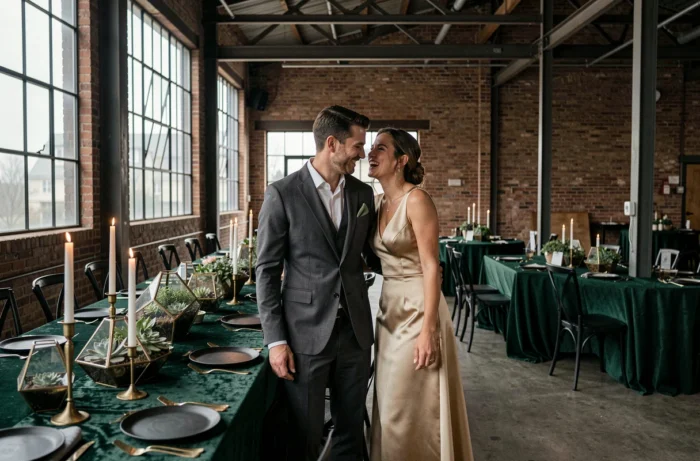
A vineyard naturally calls for a theme around local produce or the art of living. An industrial hall in an urban setting better supports contemporary, graphic, or cinematic universes. A Mediterranean garden leans towards warm palettes and raw materials.
The season plays a comparable role. A winter wedding allows for working with light (candles, garlands, fireplace fires) in a way that is impossible in the middle of summer. The available flowers also change radically from one season to another. A florist interviewed in September 2026 by La Montagne described the return of bold colors like fuchsia and orange, with a marked preference for seasonal flowers rather than imported varieties.
What the coherence of venue-theme changes concretely
- The decoration budget decreases when the venue already carries the desired ambiance: less transformation, less furniture rental
- Local vendors (caterers, florists) work more easily with products that correspond to the territory
- Photos gain in naturalness when the added decor interacts with the existing architecture instead of masking it
From decor to experience: how the theme becomes immersive
Feedback from industry professionals in 2026 converges on one point: the theme evolves from a visual decor to an experience lived by the guests. This trend accompanies a broader movement towards more intimate and personalized weddings, as reported by La Dépêche in September 2026.
A “travel” theme is no longer just represented by vintage suitcases as centerpieces. It can be expressed in a passport booklet handed out upon arrival, culinary stations representing the countries traveled together, a playlist built around the music discovered along the way.
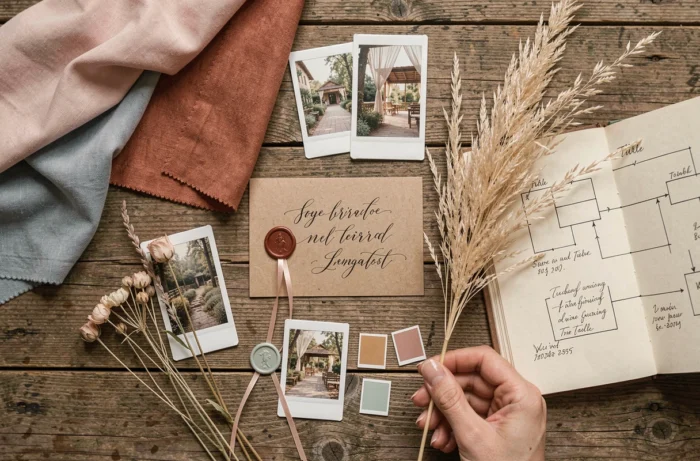
Three levers to make a theme concrete
The first lever is sensory. Beyond the visual, a theme can engage the sense of smell (scented candles, menu with specific spices), touch (textures of tablecloths, materials of guest favors), and sound (consistent musical ambiance throughout the day).
The second lever is participatory. Multi-day formats are gaining ground: a brunch the next day, an activity the day before. Each moment can extend the theme without repeating it. A successful theme is experienced over time, not just during the reception.
The third lever is narrative. The secular ceremony, when it exists, offers a space to tell the couple’s story. The theme finds a spoken expression there, not just decorative. The choice of texts, entrance and exit music, and symbolic rituals can reinforce the narrative thread without overloading the decoration.
Color palette and theme choice: in what order to proceed
Many couples start by choosing colors from a swatch, then look for a theme that fits. This approach reverses the logic. The theme should dictate the palette, not the other way around.
A theme centered around Mediterranean Provence calls for ochres, olive greens, and off-whites. A black and white cinematic theme imposes its own chromatic rigor. When the palette stems from the theme, each element (stationery, floral arrangements, bridal party outfits) finds its place without artificial coordination effort.
Field feedback diverges on this point: some wedding planners recommend setting two to three colors very early to frame the budget, while others prefer to let the theme mature before locking anything in. The right approach likely depends on the degree of clarity the couple already has in mind.
- If the couple has a clear universe (a country, an era, a shared passion), the theme naturally guides towards a limited palette
- If the starting point is more vague (“we want something warm”), working first on colors can help clarify the direction
- In both cases, limiting the palette to three main shades avoids visual dispersion and simplifies collaboration with vendors
The question of the perfect theme has no universal answer. A wedding where each choice stems from a shared intention by the couple creates an atmosphere that guests identify without needing an explanation. It is this silent coherence, more than displayed originality, that makes a day memorable.