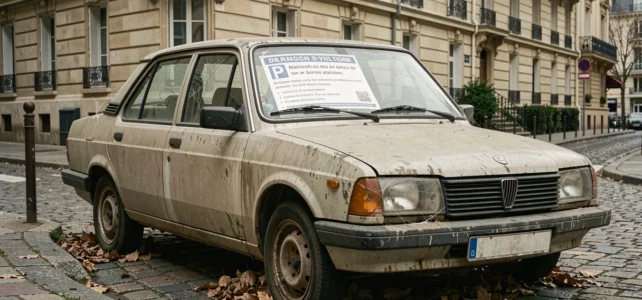
A vehicle has been parked in front of your house for weeks. The tires are deflating, dust is accumulating on the windshield, and no one comes to move it. You find yourself caught between the desire to solve the problem yourself and the fear of making a legal mistake. The good news: there is a procedure to have a clamped car removed, but it varies depending on whether the vehicle is on public roads or private property.
Valve Check: The Discreet Method of Municipal Police
Before initiating a removal procedure, you must first prove that the vehicle has not moved. It is often assumed that the word of a local resident is sufficient. In practice, municipal services follow a specific protocol to establish immobility.
Several municipalities use a valve check. An officer comes by for the first time, marks the valves or tires of the vehicle, and then returns a few days later. If the markers have not changed position, the parking is deemed abusive.
This detail has a direct consequence: an owner who moves their car a few meters, even without actually driving, can reset the clock. The classification of a clamped car is based on its immobilization at the same point, not on the duration of its presence in the neighborhood.
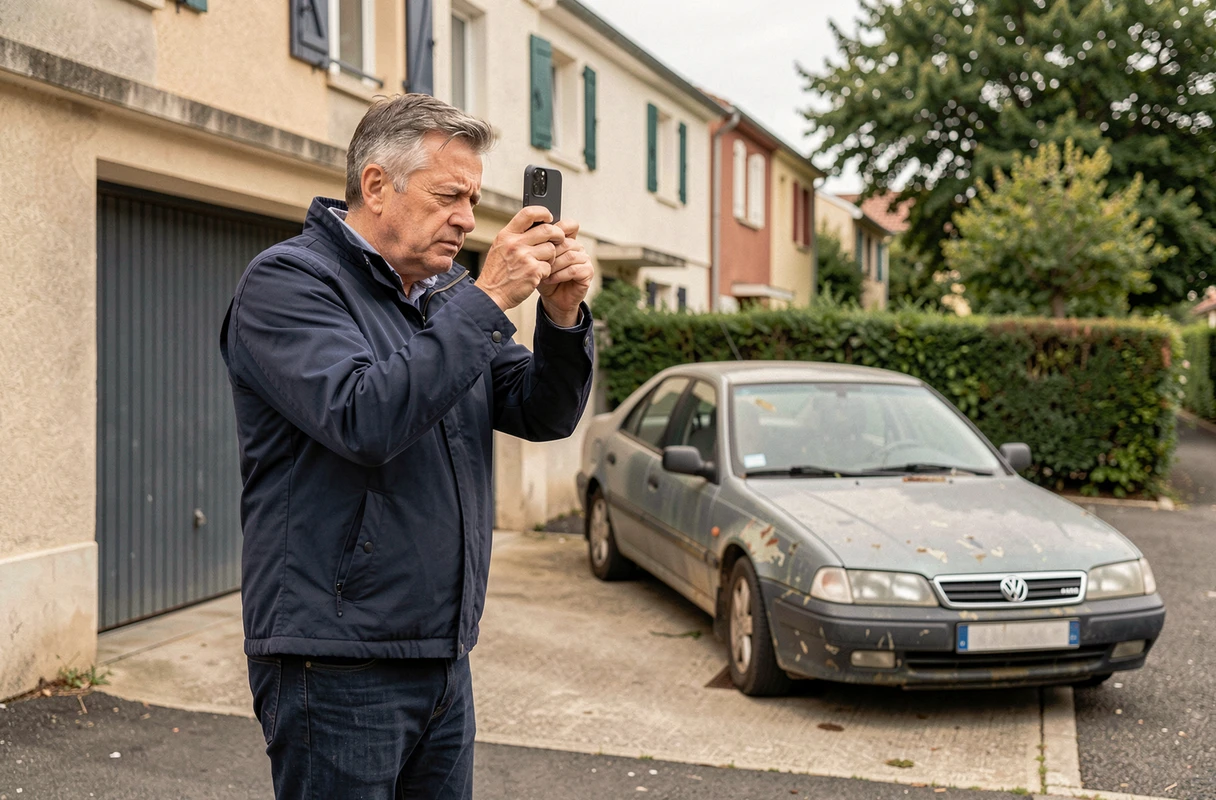
Before contacting the town hall, it is advisable to compile a dated file: photos from several angles with timestamps, a record of the license plate, and, if possible, a testimony from a neighbor or caretaker. This file secures the request and limits disputes. To know precisely what to do in case of a clamped car, this traceability from the start saves considerable time.
Reporting an Abandoned Vehicle on Public Roads
When the clamped car is parked on a street, sidewalk, or public parking lot, the procedure goes through the town hall and the municipal police. You cannot directly call a tow truck or a private towing service.
Contacting the Municipal Police or Town Hall
The first reflex is to contact the road service or municipal police. You provide the exact address, make, color, and, if the plate is visible, the vehicle’s registration number. Some municipalities offer an online form or a dedicated app for this type of report.
Assessment and Formal Notice to the Owner
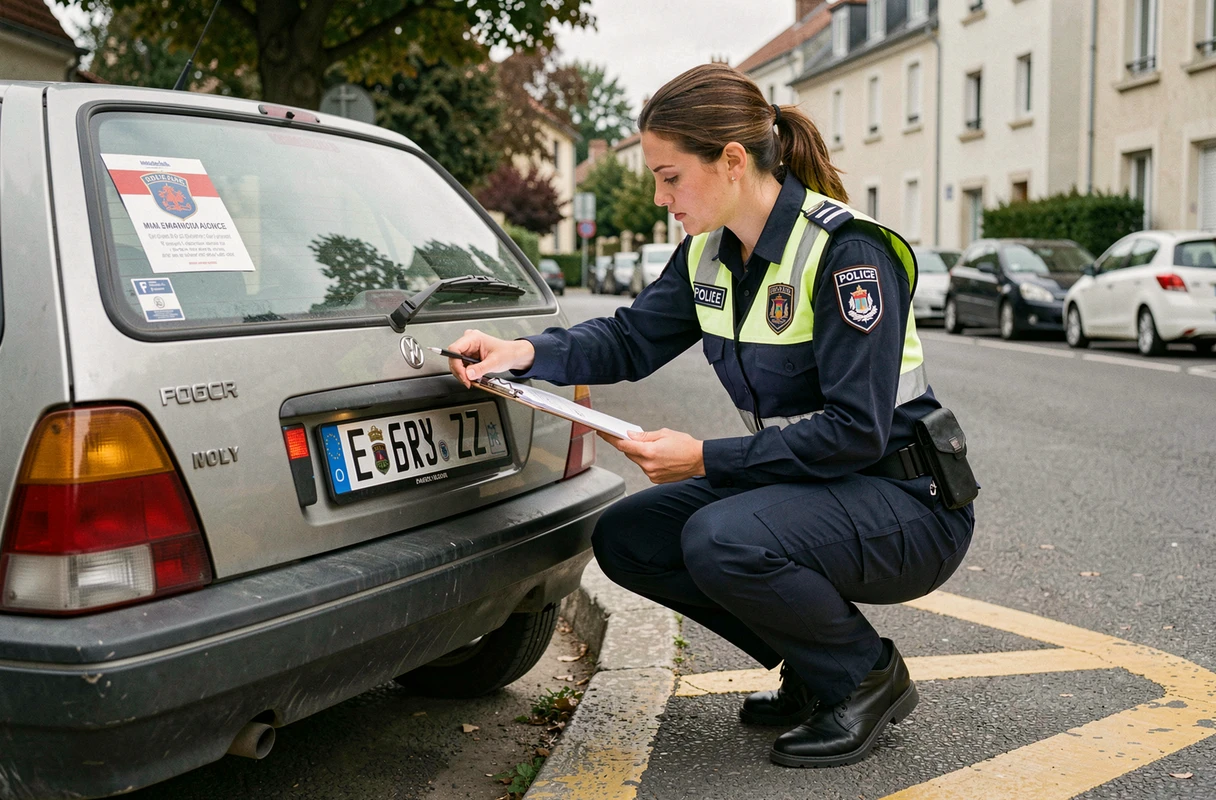
An officer comes to assess the immobilization. If the vehicle is identifiable, the police contact the owner and send a formal notice. The owner then has a deadline to move or retrieve their vehicle.
If the owner does not respond, or if the vehicle is not identifiable (absence of plate, unreadable serial number), the municipality may decide on removal to the impound lot. Responses vary regarding actual intervention times: some cities process the request in about ten days, while others take longer due to a lack of available tow trucks. It is recommended to follow up regularly.
Clamped Car in Private Parking: Procedure and Pitfalls to Avoid
The situation becomes more complicated when the vehicle occupies a private parking space in a condominium or housing development. The urge to push the car out or to call a tow truck on your own initiative is tempting but legally risky.
Taking action yourself constitutes a punishable act, even if you own the parking space. French law requires going through a regulated procedure, even on private property.
Here are the elements to gather before any action:
- Dated photos of the vehicle from several angles, showing its condition and exact location in your space.
- Record of the license plate if present, along with the make and color of the vehicle.
- Written testimony from a neighbor, caretaker, or property manager confirming the duration of the vehicle’s presence.
- Registered letter to the identified owner (if possible) requesting them to remove the vehicle.
If the owner remains untraceable or does not respond, you can contact the mayor of the municipality. The mayor has police powers that allow them, after assessment, to order removal even on private property, provided that the vehicle shows clear signs of abandonment.
Clamped Car or Junk: A Distinction That Changes Everything
People often confuse a clamped car with an end-of-life vehicle (ELV). The difference is not cosmetic: it determines the applicable procedure and the outcome for the vehicle.
A clamped car is a vehicle still in working condition, simply immobilized in the same spot for an extended period. It ends up in the impound lot, and the owner can retrieve it by paying the fees.
An ELV, or junk, is a vehicle that is technically incapable of driving: missing engine, rusty chassis, missing wheels. It falls under a destruction logic regulated by environmental regulations. Its treatment goes through an authorized center, and the owner cannot retrieve it in its current state.
When reporting a vehicle, this distinction matters. A vehicle that is simply dusty with an expired technical inspection remains a clamped car. A vehicle without wheels or windows is an ELV. Municipal services assess this difference on-site, and the subsequent procedure depends on it.
- Clamped car: impoundment, recoverable by the owner under certain conditions.
- Junk or ELV: directed to an authorized destruction center, specific formal notice procedure.
- Unidentifiable abandoned vehicle: the municipality can directly initiate removal after assessment.
Patience remains the most underestimated factor in these processes. Between the initial report and the actual removal, several weeks can pass. Compiling a solid file from the start, following up with the relevant services, and documenting each step are the concrete levers to expedite the processing of your request.