
The transfer of plots in a PRL is based on a notarized deed that transfers full ownership of the land to the buyer. This point seems to be understood by many buyers, but its legal and tax implications remain poorly anticipated, especially in Vendée where the supply of residential leisure parks has increased in recent years.
Co-ownership regulations in PRL: clauses that limit your freedom as an owner
A PRL with plot transfer operates legally like a co-ownership. The co-owners’ association, assisted by a professional property manager, manages the common areas, internal roads, networks, and green spaces. You own your plot, but the co-ownership regulations strictly govern the use of the land.
We observe that buyers rarely read these regulations before signing. The clauses address concrete issues: type of construction allowed (wooden chalet, light leisure housing, mobile home depending on the case), maximum height, color of cladding, prohibition of opaque fences, obligation to connect to the park’s networks.
Some regulations also require the use of a builder approved by the park manager, which limits competition and can inflate construction costs. To delve deeper into the specifics of this arrangement, we recommend consulting the analyses available on the subject of PRL with plot transfer in Vendée on Immopedia before committing.
The key point to check first: resale conditions. Some PRLs include a right of first refusal in favor of the manager or a consent clause that subjects the sale to the agreement of the property manager. These clauses can extend the resale period by several months.
Taxation on the resale of a PRL plot in Vendée
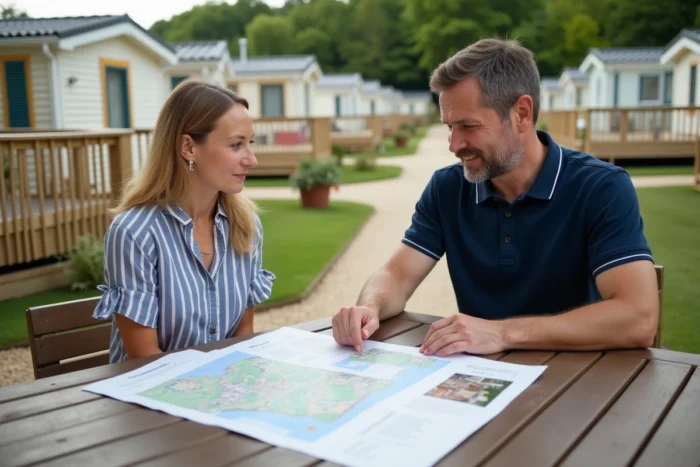
The resale of a plot acquired in full ownership in a PRL follows the regime for capital gains on real estate for individuals. Specifically, the net capital gain is taxed at 19% income tax and 17.2% social contributions, resulting in a total rate of 36.2%.
Reductions for the duration of ownership apply according to the standard scale: total exemption from income tax after 22 years of ownership, exemption from social contributions after 30 years. A buyer who resells their Vendée plot after eight or ten years will therefore face significant taxation on the capital gain.
This tax regime clearly distinguishes PRLs with plot transfer from traditional camping. On a rented camping site, you resell a mobile home (a depreciating movable asset). In a PRL with transfer, you resell land (a real estate asset that may appreciate in value, but is treated as such for tax purposes).
Preferred holding strategy
For a leisure residence project in Vendée, long-term holding remains the only tax-coherent strategy. Buying a PRL plot with the idea of reselling it in five years exposes you to heavy taxation that can absorb most of the capital gain, especially if the local market has not significantly progressed.
Main residence in PRL: what urban planning law really says
Article R. 111-37 of the urban planning code classifies PRLs as developed land intended for the accommodation of light leisure housing. This qualification has a direct consequence: a PRL is legally intended for leisure use, not for permanent residence.
In practice, some owners establish their main residence in a PRL open year-round. Municipalities sometimes tolerate this situation, but it remains legally fragile. The park’s development permit specifies the authorized use, and a change of destination would require a modification of the applicable urban planning document.
The practical consequences are multiple:
- Home insurance may refuse coverage or exclude it if the property is declared as a main residence while the development permit does not allow it.
- Tax domiciliation at the PRL address does not regularize the use: the administration can reclassify at any time.
- In case of a dispute with the property manager, a permanent occupant who overloads the common infrastructure (water, sanitation) may be confronted with the co-ownership regulations.
Co-ownership charges and the real cost of a Vendée PRL
The budget of a PRL is not limited to the purchase price of the plot. Co-ownership charges cover the maintenance of common areas, management of networks, insurance for common parts, and, in some parks, access to collective facilities (pool, common room, play areas).
We recommend requesting the last three minutes of the general assembly before any purchase. They reveal the dynamics of the park: voted works, unpaid charges, conflicts between permanent and seasonal residents, manager’s projects.
- Check the amount of the works fund (mandatory in co-ownership since the ALUR law) and its level of provisioning.
- Identify if any roadworks or sanitation upgrades are planned, as these items can represent significant calls for funds.
- Compare annual charges with those of a rented camping site to measure the real differential.
The trap of a poorly managed park
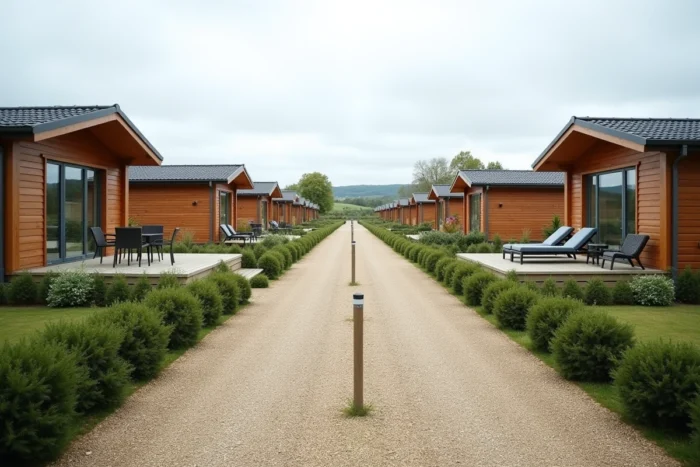
A PRL whose manager or property manager allows the common areas to deteriorate quickly loses attractiveness. Reselling a plot in a poorly maintained park becomes difficult, regardless of the location in Vendée. The quality of park management directly affects the asset value of your plot.
The choice of a PRL with plot transfer in Vendée remains relevant for a buyer aiming for a long-term leisure residence, who reads the co-ownership regulations before signing and incorporates the resale taxation into their calculations. Outside of this profile, the risk of asset disappointment is not negligible.